

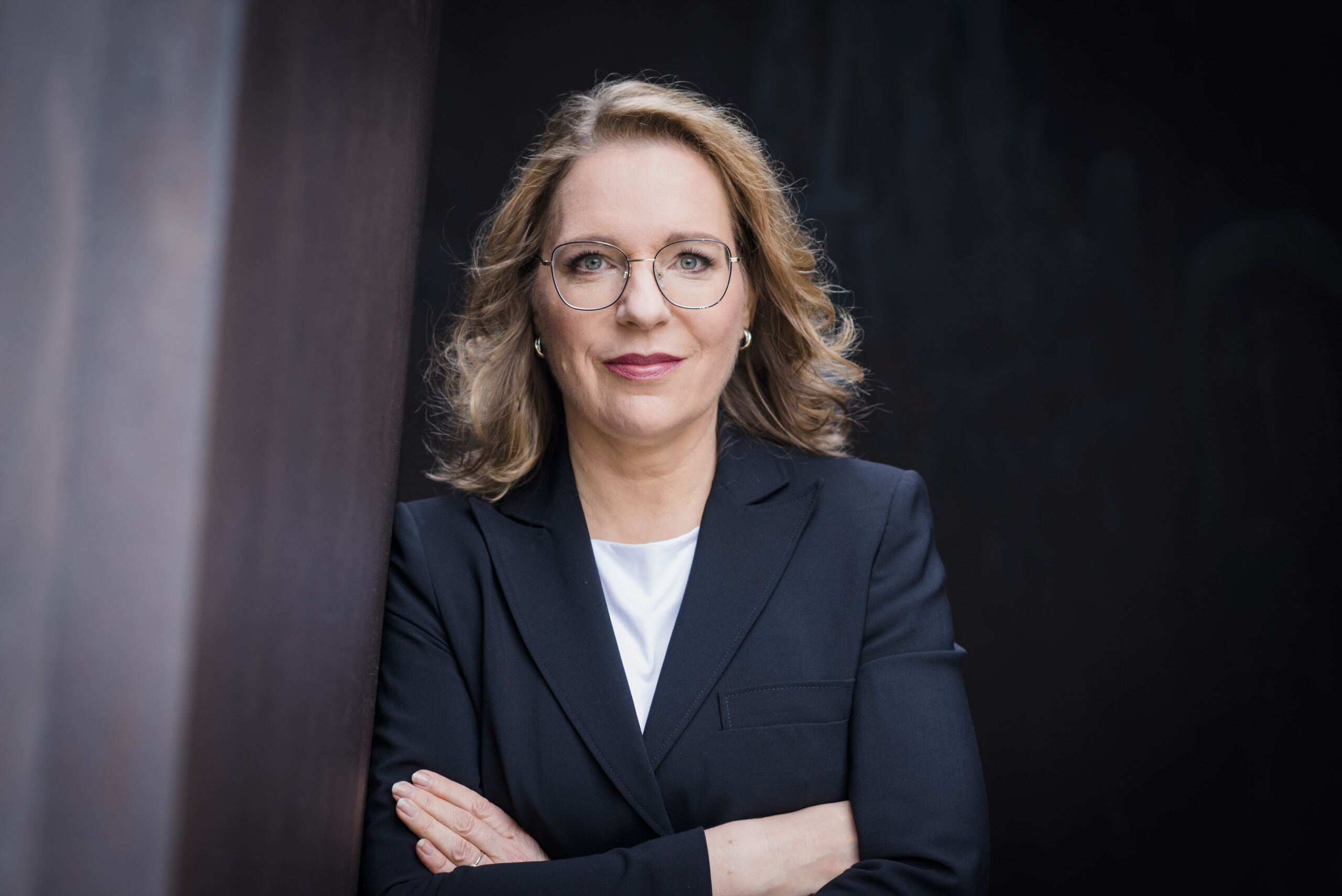
Prof. Dr. Claudia Kemfert: “The Greatest Risk to Competitiveness Is Delayed Investment”
The green transition can not only be Europe’s response to the climate crisis, but also an opportunity to strengthen competitiveness, energy security and technological independence. Prof. Dr. Claudia Kemfert, Head of the Department of Energy, Transportation and Environment at the German Institute for Economic Research, discusses the challenges facing Europe today, the lessons other countries can learn from Germany’s experience, and why delaying investment in the transition may pose a greater risk than the transition itself.
What empirical evidence most convincingly demonstrates that the green transition can strengthen Europe’s competitiveness rather than weaken it?
Prof. Dr. Claudia Kemfert: The strongest evidence is that clean technologies increasingly reduce operating costs, import dependence and exposure to volatile fossil-fuel prices. Renewable electricity is now among the most cost-effective sources of new power generation. While electrification improves efficiency across industry, buildings and transport. Heat pumps, electric vehicles and many electric industrial processes require far less primary energy than fossil-based alternatives. Countries and companies that invest early also gain technological leadership, export opportunities and more resilient supply chains.
Europe already has considerable expertise in grids, energy efficiency, industrial engineering, offshore wind, heat pumps and circular production. These are growth markets, not environmental niches. The real competitiveness risk is therefore not climate policy itself, but delayed investment. Companies that remain locked into expensive fossil energy face higher costs. They also risk greater price volatility and the danger of losing markets to competitors that modernise faster. The green transition should not be understood as an additional burden placed on the old economy. It is the modernisation strategy through which Europe can improve productivity, resilience and technological sovereignty.
Germany’s energy transition is often described as both a model and a warning. From your perspective, what has worked well, and what systemic mistakes should other countries avoid repeating?
Germany has demonstrated that a highly industrialised economy can expand renewable energy rapidly, maintain one of the world’s most reliable electricity systems and mobilise broad participation through municipal utilities, cooperatives and citizen energy. Wind and solar power have become central pillars of the electricity system. The expansion of renewables largely compensated for the electricity generation lost through the nuclear phase-out. Contrary to a widespread narrative, nuclear power was not simply replaced by coal. The main shortcomings were therefore not a lack of renewable generation, but insufficient modernisation of the overall energy system.
Germany was too slow in expanding digital infrastructure, smart grids, storage, demand-side flexibility and intelligent electricity markets. Grid planning and permitting remained cumbersome, while the electricity, heating, transport and industrial sectors were not integrated quickly enough. Another serious mistake was the long dependence on supposedly cheap Russian gas. Its geopolitical and economic risks were systematically underestimated. Stop-and-go policies and frequent regulatory changes also weakened investment and public confidence. Other countries should avoid treating the transition as a simple exchange of one power source for another. It must be designed as an integrated, digital, flexible system in which renewable generation, grids, storage and consumers interact intelligently. Stable rules, modern infrastructure and the consistent reduction of fossil-fuel dependence are essential.
Energy prices have become a major political issue across Europe. How can governments protect households and industry from volatility while still sending the right market signals for decarbonization?
Governments should protect people and productive investment, not fossil-fuel consumption. Broad price caps, fuel rebates and untargeted subsidies are expensive, socially poorly targeted. It weakens incentives to save energy or invest in clean alternatives. Higher-income households, which generally consume more energy, often receive the greatest benefit from such measures. A better approach is direct income support for low- and middle-income households and social tariffs for essential energy use. Also targeted programmes for insulation, heat pumps, efficient appliances and affordable electric mobility are needed. These measures reduce bills permanently rather than subsidising the next fossil-fuel purchase.
For industry, temporary support should be linked to clear transformation plans, energy-efficiency improvements and investment in climate-neutral production. Long-term renewable power purchase agreements, contracts for difference and public guarantees can reduce investment risks without preserving inefficient structures. Electricity taxes and levies should also be reconsidered because electrification is central to decarbonisation. The guiding principle should be: cushion social hardship, stabilise forward-looking investment and retain the signal that fossil energy is risky and will progressively lose its economic advantage.
You have been a strong advocate of renewables over nuclear and fossil fuels. What are the most persistent myths surrounding renewable energy that continue to distort public debate?
The most persistent myth is that renewables are inherently unreliable. In reality, modern electricity systems balance variable generation through interconnected grids, storage, demand response, flexible consumption, hydropower, sustainable bioenergy and regional exchange. Variability is a challenge to be managed, not a reason to reject renewable energy.
Another myth is that renewables are responsible for high electricity prices. Wind and solar power usually reduce wholesale market prices because they have no fuel costs. High fossil-fuel prices, grid congestion, taxes, outdated market structures and delayed infrastructure investment are often the more important cost drivers.
A third myth is that every unit of renewable capacity requires an equivalent fossil-fuel or nuclear backup plant. We do not need a duplicate system but a flexible one in which generation, consumption, storage and networks interact intelligently. Finally, critics often portray the energy transition as an unresolved technological experiment. Most of the necessary technologies already exist. The main barriers are slow permitting, inadequate grids, regulatory uncertainty and organised interests defending established business models. Renewables are not the weak link. Delayed system reform is.
Europe’s dependence on imported fossil fuels has exposed strategic vulnerabilities. How should energy security be redefined in a climate-neutral economy?
Energy security should no longer mean securing ever larger quantities of oil and gas from a changing list of suppliers. Diversifying fossil-fuel imports may reduce dependence on one country. But it does not eliminate exposure to geopolitical conflicts, shipping disruptions, global price shocks or supplier pressure. In a climate-neutral economy, security means reducing the need for imported fuels altogether. Such a system is based on domestic renewable energy, efficient buildings and industry, electrified transport, storage, resilient grids and flexible demand. It is more decentralised and therefore less vulnerable to the failure of individual pipelines, terminals or suppliers.
Europe will continue to trade energy, technologies and raw materials. However, the strategic focus must shift from obtaining fossil fuels to diversifying supply chains for clean technologies and critical minerals, improving recycling and developing a European circular economy. Cybersecurity, grid stability, storage capacity and stronger cross-border coordination will also become central elements of energy security.
The safest unit of energy is the one we do not need to import. Every wind turbine, solar installation, renovated building and electric vehicle reduces both greenhouse-gas emissions and strategic vulnerability.
The EU taxonomy triggered heated debates. What risks do you see in labeling gas and nuclear energy as “sustainable” investments?
The main risk is that the label blurs the crucial distinction between genuinely sustainable technologies and activities that are transitional, controversial or incompatible with long-term climate neutrality.
Gas is a fossil fuel. New gas infrastructure can create carbon lock-in, stranded assets and continuing dependence on imported fuels. Even where future conversion is promised, the term “hydrogen-ready” is often based on uncertain assumptions. About technology, infrastructure, fuel availability and costs. It can become a convenient justification for building assets that will continue to use fossil gas for decades.
Nuclear power produces relatively low operational carbon emissions, but new projects are generally expensive, slow to construct and associated with unresolved questions concerning radioactive waste, safety, financing and decommissioning. Long construction times are particularly problematic when emissions must be reduced rapidly.
Calling both gas and nuclear energy sustainable may redirect scarce capital away from renewables, grids, storage, efficiency and demand-side solutions. Places where emissions reductions can often be delivered faster and more cheaply. Financial markets require clarity. Transitional activities may need specific conditions, but they should not receive the same green label as solutions demonstrably compatible with a renewable, climate-neutral system.
Transport remains one of Europe’s most difficult sectors to decarbonize. What policies could finally break our dependence on combustion engines?
Europe needs a clear and credible phase-out pathway for new combustion-engine cars. Constantly reopening agreed targets creates uncertainty for consumers and manufacturers. It risks leaving the European automotive industry behind competitors that are already investing heavily in electric mobility. The phase-out must be accompanied by reliable charging infrastructure, stronger rail and public transport. We need safer cycling and walking networks, and urban planning that reduces the need for long journeys. Electric mobility also has to become socially accessible. Social leasing programmes, targeted assistance for lower-income households and a healthy second-hand market can prevent the transition from becoming a privilege for high earners.
At the same time, company-car taxation and other subsidies that favour large, heavy or fossil-fuel vehicles should be reformed. Manufacturers need incentives to offer smaller, resource-efficient and affordable electric cars rather than concentrating primarily on premium models. For freight transport, rail, battery-electric trucks, charging corridors and, in selected cases, electrified roads can all contribute. Sustainable fuels will remain important for aviation and shipping, but they should not be used as an excuse to delay the electrification of road transport. The goal is not simply to replace every combustion car with an electric one. Europe needs a more efficient, affordable and less car-dependent mobility system.
Industry fears losing competitiveness due to climate regulations. How can Europe design climate policy that supports innovation instead of relocation?
Europe should combine credible long-term standards with targeted support for investment. Industry needs certainty that climate-neutral production will be rewarded. That policy will not reverse direction after companies have committed substantial capital. Carbon contracts for difference, green lead markets, faster permitting, modern electricity grids and access to affordable renewable power can support investment in clean steel, chemicals, cement and other energy-intensive sectors. Public support should be conditional on measurable transformation, energy efficiency, good employment and continued production in Europe. It should finance modernisation rather than compensate companies indefinitely for using fossil energy.
The Carbon Border Adjustment Mechanism can reduce the risk that production is relocated to countries with weaker climate rules. Product standards, labelling and public procurement can simultaneously create reliable demand for low-carbon materials. European governments should also coordinate their support instruments more closely to avoid a subsidy race within the single market. Competitiveness does not result from permanently subsidising energy consumption or preserving obsolete technologies. It comes from innovation, productivity, skilled workers, reliable infrastructure and resilience. Europe’s strategic objective should be to become the best place to develop, manufacture and scale the technologies of a climate-neutral economy.
Prof. Dr. Claudia Kemfert is an energy economist and Head of the Department of Energy, Transportation and Environment at the German Institute for Economic Research (DIW Berlin). She is also Professor of Energy Economics and Energy Policy at Leuphana University Lüneburg and a member and Co-Chair of the German Advisory Council on the Environment. Her research focuses on the economic impacts of climate and energy policy, renewable energy, energy security and sustainable mobility. She is the author of numerous scientific publications and books and is a prominent voice in the public debate on the energy transition and climate protection.
Read also: “Europe Doesn’t Need to Copy Silicon Valley”
Last Updated on October 8, 2026 by Anastazja Lach