
Renewable Energy Needs Stability. An interview with Alicja Chilińska-Zawadzka, CEO of EDF power solutions Polska, on the needs, challenges and future of the energy sector
For years, the debate on sustainable energy development focused primarily on one question: how can we produce more clean energy? Today, another question is increasingly coming to the forefront: how can we effectively integrate that energy into the system? Is this a sign that Poland’s energy transition is entering a new phase?
Absolutely. For many years, the natural priority was to increase renewable energy capacity, because Poland needs new low-carbon sources of electricity generation. That stage is still ongoing, but today we can see more clearly than ever that a modern power system must not only be low-carbon, but also stable, flexible and predictable.
This is the essence of sustainable development in the energy sector. It is not solely about reducing emissions, although that remains fundamental. It is also about security of supply, energy independence, the efficient use of infrastructure, and the ability to balance supply and demand in real time. Wind and solar energy are becoming increasingly competitive, but they remain dependent on weather conditions and the time of day. That is why the energy system of the future must answer not only the question of how much energy we can produce, but also when that energy is available and how we can manage it.
In Poland, there is increasing discussion about curtailing renewable energy generation, while at the same time the share of renewables in the energy mix continues to grow. Are energy storage systems the answer to this challenge?
They are one of the key answers. Today, Poland faces a situation in which the system receives very large amounts of renewable energy during certain hours, while requiring additional support during others. This creates an increasing need for flexibility. If, on a sunny and windy day, we generate more electricity than the system can absorb at a given moment, there is a risk of generation curtailment. This means that some of the clean energy we could otherwise use simply goes to waste.
An energy storage facility allows us to manage this situation differently. It can absorb electricity when there is a surplus and then return it to the grid when demand increases or when renewable generation declines. In this way, energy storage is not an addition to the energy transition; it is an element that makes the transition more effective.
So an energy storage facility is not simply a “large battery”?
Technically speaking, we could describe it that way, but from a business and system perspective, that would be a significant oversimplification. Energy storage provides services to the grid. It helps stabilise frequency, supports system balancing, reduces the risk of congestion and enables more effective use of renewable energy. In certain business models, it can also improve the predictability of revenues from renewable energy projects by allowing electricity sales to be shifted to hours when energy is more needed.
That is why, at EDF power solutions, we view energy storage not as standalone devices but as part of a broader system architecture. It is flexibility infrastructure. And flexibility will be to the energy sector what generation capacity itself has been for decades: a prerequisite for security.
EDF power solutions is commissioning its first energy storage facility in Poland. What significance does the Stary Grodków project have?
It is a very important project for us because it marks the beginning of a new chapter for EDF power solutions in Poland. The 50 MW energy storage facility in Stary Grodków is our first project of this kind in the country and one of the first commercial-scale, utility-scale energy storage facilities on the Polish market. It is a practical example of the direction in which the Polish energy sector should develop.
In recent months, there has been considerable discussion about legislative changes, including the so-called Grid Act. Could these new regulations accelerate the development of energy storage?
This is an important step, particularly because access to the grid has become one of the greatest barriers to new energy investments in Poland. The amendment to the Energy Law, commonly referred to as the Grid Act, clarifies some of the rules governing grid connections and is intended to facilitate the development of renewable energy, energy storage and other technologies that support the power system.
At the same time, it must be stated clearly that legislative change alone will not solve all existing challenges. We need stable, predictable and practical regulations for energy storage. This includes clear market participation rules, the ability to combine multiple services, predictable mechanisms for remunerating flexibility, and efficient grid connection procedures. An energy storage facility can support the system in many different ways, but regulations must allow it to deliver that value fully.
What specifically needs to change to accelerate the development of energy storage in Poland?
Predictability is the most important factor. Investments in energy storage are capital-intensive, and their business model is typically based on several revenue streams, including balancing services, the capacity market, energy arbitrage and cooperation with renewable energy sources. This model is commonly referred to as revenue stacking. For it to work effectively, investors must know what services an energy storage facility can provide, under what conditions and over what time horizon.
The second area concerns grid connections. Energy storage facilities should not be viewed solely as an additional burden on the grid. If properly designed, they can reduce congestion, stabilise system operations and increase the integration potential of renewable energy.
The third element is technical standards. The market is expected to develop rapidly, which is why we need clear requirements regarding design, operation and cooperation with emergency services.
The safety of energy storage facilities is often a topic that raises questions among the public. How does EDF power solutions approach this issue, and how does the Group’s global experience translate into the Polish market?
We approach it with great care. An energy storage facility is an advanced industrial installation that must be designed, built and operated in accordance with the highest standards—from technology selection and detection systems to procedures for cooperation with local emergency services. At EDF power solutions, we draw on more than 15 years of global experience across the Group. We know that safety is not based on declarations, but on procedures, testing, audits and responsible operations.
This experience also shapes the way we deliver projects in Poland. As part of its Ambitions 2035 strategy, the EDF Group plans to reach 11 GW of installed energy storage capacity by 2035, demonstrating that energy storage is one of our key development priorities. For Poland, this means access to know-how, analytical tools and technical standards developed in markets that have already faced similar challenges. We are able to leverage the Group’s expertise while adapting solutions to Polish system, regulatory and market conditions.
Is Poland currently an attractive market for energy storage?
Yes, because the need for flexibility in Poland will continue to grow. We are witnessing dynamic growth in low-carbon generation, while offshore wind farms and nuclear power plants are still to be built and connected to the grid. We are also hearing further announcements from the government regarding major investments in the energy sector.
Poland also has significant industrial and investment potential. Capital is available for good projects, but it requires predictability. If we want energy storage to develop at a scale that matches the needs of the system, we must treat it as strategic infrastructure rather than as a technological add-on to renewable energy.
In public debate, the energy transition is often portrayed as a cost. You seem to view it more as an investment in stability.
Because that is exactly how it should be viewed. The energy transition requires investment, but the alternative also comes at a cost: increasing risks of capacity shortages, greater dependence on fossil fuels, curtailment of low-cost renewable energy generation, grid congestion and higher price volatility. A sustainable energy system is one that successfully combines climate objectives, security of supply and sound economics.
Energy storage is a good example of this logic. It helps us make better use of the energy we are already capable of producing. It supports the grid, increases system resilience and, in the longer term, can reduce costs associated with a lack of flexibility.
What role does EDF power solutions play in this vision for Poland?
We want to be a partner in the energy transition in the broadest sense of the term. EDF power solutions has been operating in Poland for many years, has extensive experience in wind energy, is developing solar and energy storage projects, and globally benefits from being part of one of Europe’s largest energy groups. Our ambition is not only to build additional generation capacity but also to deliver solutions that address the needs of the energy system.
In Poland, this means developing renewable energy projects while also investing in flexibility. Our energy storage facility in Stary Grodków is the first step in this area, but we do not view it as a standalone project. It is part of a broader vision in which renewable energy, energy storage, generation management and responsible cooperation with the grid form a single integrated system.
If you had to identify one thing that the Polish energy sector needs most in the coming years, what would it be?
Coherence. We need coherence between energy policy, regulations, grid investments, supply chain development, renewable energy development and flexibility development. It is impossible to transform the energy sector effectively if each of these elements develops at a different pace. New generation sources need the grid. The grid needs flexibility. Flexibility needs stable market rules. And investors need predictability.
If we treat all these elements as one ecosystem, Poland can build a modern, secure and more competitive energy system. This is a matter of economic security, industrial resilience, quality of life for energy consumers and strengthening the competitiveness of the entire economy.
So renewable energy requires not only technical stability, but regulatory stability as well?
Exactly. The technology is ready, capital is interested and the system need is obvious. The key challenge now is to create conditions in which good projects can be delivered quickly, safely and predictably.
For me, the most important thing is that we do not think about the energy transition solely through the lens of individual technologies. The future of the energy sector will belong to a well-managed system in which all elements work together. And that is precisely the kind of system we want to help build in Poland.
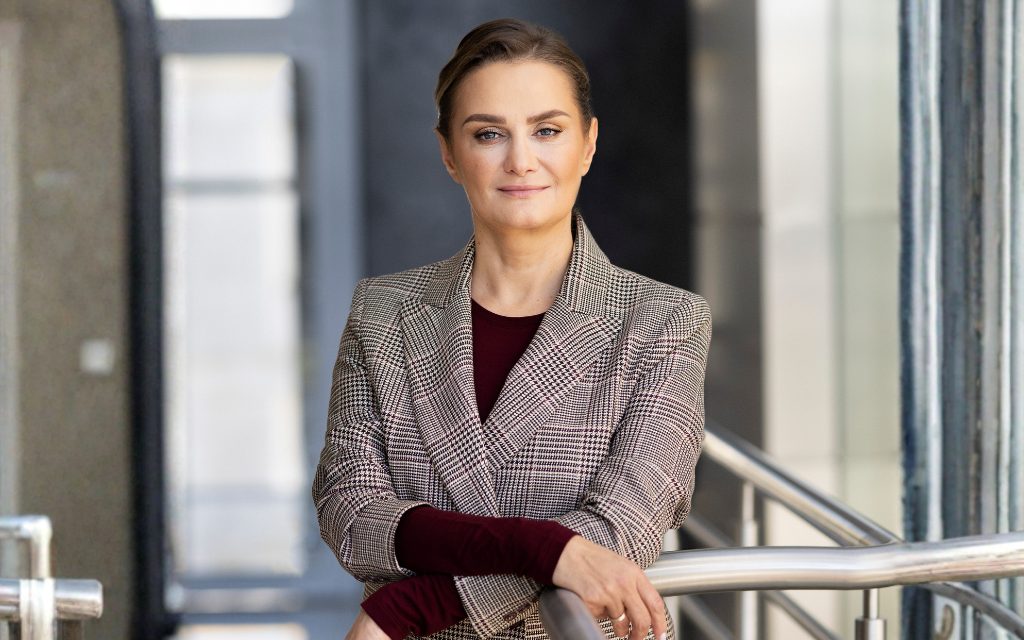
Alicja Chilińska-Zawadzka
A seasoned executive with over 20 years of experience in the development and delivery of renewable energy projects. She serves as CEO of EDF power solutions Polska, part of the EDF Group, a global leader in the energy sector. She is a graduate of the European University Viadrina in Frankfurt (Oder), Germany.
Last Updated on June 29, 2026 by Anastazja Lach